Office Clearance in Lee

Office clearance in Lee should feel organised, discreet and practical, with a clear focus on removing unwanted office items while keeping the working day on track. We provide a structured clearance service for workplaces that need desks, chairs, filing, storage units, screens and general office contents taken away in a careful, managed way. The aim is to make the process straightforward, whether you are clearing a single room, several floors or a mixed commercial space.
Our office clearance work covers a wide range of items that tend to build up in occupied and changing premises. That can include surplus furniture, redundant fittings, archived office materials and bulky equipment that needs to be lifted out with care. We work in a way that supports tidy, methodical removal, so the space can be left ready for its next use rather than simply emptied without thought.
If you need a practical clearance plan for an office in Lee, start by identifying the items that must go, the items that need to stay and any access details that may affect removal. A short written list is often enough to begin. When you are ready, ask for a quotation and we can look at the scope with you.
What an office clearance can include
Furniture, fittings and routine office contents
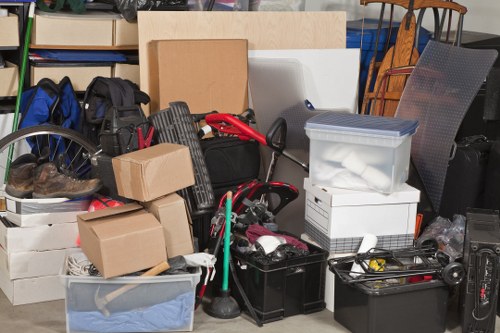 Most office clearances are about more than taking away a few unwanted desks. They often involve a mix of items that have accumulated over time, from task chairs and tables to cabinets, shelves, partitions and reception furniture. The service can also cover items from back offices, staff rooms and meeting spaces, where mixed furniture and storage pieces need to be removed together rather than handled piecemeal. We can help with an office clearance that keeps those items together logically and avoids unnecessary disruption.
It is often useful to think in terms of zones, because office buildings and shared business premises rarely hold one type of item in one place. A sensible clearance may need to deal with workstations in open-plan rooms, locked storage in smaller areas, and larger pieces that need to be dismantled before removal. Clear priorities help make the work more efficient, and they also reduce the chance of taking away anything that still has value or ongoing use on site.
Typical items that may be removed during an office clearance include:
- desks, task chairs and conference tables
- filing cabinets, cupboards and storage units
- pedestal drawers and shelving
- reception furniture and waiting area seating
- miscellaneous office contents that are no longer needed
Preparing a clearance in a working premises

In a busy office, preparation often matters as much as the removal itself. The simplest approach is to separate what is staying from what is going, then mark any items that require extra care because they are shared, fragile or still awaiting a decision. Where there are corridors, stairwells, lifts or loading points to consider, a little planning can prevent delays and reduce the amount of handling needed on the day.
A clear inventory is helpful when you want to avoid confusion, especially in multi-user buildings or offices with several departments. Photographs can also assist where the layout is awkward, access is restricted or there are items that need a closer look before collection. These steps do not need to be complicated; they are simply practical ways to help the clearance proceed in an orderly manner and keep expectations clear on both sides.
Good preparation also helps if the clearance has to fit around other building activity. A well-timed removal can support refurbishments, handovers, reconfigurations and routine space changes, but the safest result comes from accurate information about what needs removing and what needs to remain. If you are comparing options, clarity of scope is usually more useful than a rushed decision made without checking the contents properly.
Office clearance for different room types
Desks, meeting rooms and back-office storage
Not every office room requires the same approach. Meeting rooms may contain a few substantial pieces that are awkward to move without preparation, while open-plan work areas can hold many smaller items that take longer to sort. Back-office storage often brings another layer of complexity because paperwork, archived boxes and mixed contents may need separating before the physical removal begins. An effective office clearance needs to respect those differences rather than treating every room as identical.
Where furniture has been assembled on site, or where systems and storage units are built into a room layout, care is needed to remove components in the right order. The same applies to fixed or semi-fixed fittings that need to be released before they can be taken away safely. The goal is not only to empty a room, but to do so in a way that leaves the surrounding space undamaged and usable for whatever comes next.
Useful room-by-room decisions often include whether items should be removed in one visit or in stages, whether anything needs dismantling first, and whether there are areas that should be cleared last because they contain active work files or shared equipment. A measured approach is usually best when offices are still partly in use and not every item can be removed at the same time.
Furniture and equipment removal

Office clearances often centre on bulky furniture, but equipment can matter just as much. A mixed clearance may involve items that are heavy, awkward or better handled with more than one person, especially where the building has narrow routes or multiple flights of stairs. The right plan reduces strain on the premises and helps ensure items are moved out in a controlled sequence rather than being shifted around repeatedly.
Where office equipment is involved, it is sensible to separate ordinary furniture from items that may need special handling, checking or internal sorting. Not every piece of equipment is the same, and not every object should be treated as standard office waste. A responsible clearance process keeps attention on the actual contents being removed rather than assuming everything can be bundled together without review.
For many businesses, the most useful result is a clearance that balances speed with care. That means removing redundant items efficiently, leaving walkways clear during the job and avoiding unnecessary interference with items that remain in use. Practical handling matters because office furniture and equipment often share tight spaces with people, files and live business activity.
What influences the quotation
Scope, access and item types
 A quotation for office clearance is usually shaped by the size of the job, the kinds of items involved and how easy it is to reach them. A single room of furniture is very different from a larger clearance that includes storage, fixtures and awkward access. The more clearly the contents are described at the start, the easier it is to prepare a sensible price based on the actual work required rather than guesswork.
Access details also make a difference. Steps, lifts, long carrying distances, restricted parking or shared entrances can all affect the time and handling involved. If you are arranging a clearance for a managed building, it can help to note any timing restrictions or site rules in advance. That way the work can be planned around the realities of the property instead of discovering them too late.
If you are seeking an office clearance quote in Lee, the most useful starting point is a simple description of the rooms, the main items and any access limitations. You do not need to write an essay; clear notes are enough. Request a quotation when you are ready, and keep the conversation focused on what must be removed.
How the clearance is carried out
An office clearance is usually easiest to manage when the sequence is agreed in advance. That may mean removing loose contents first, then larger furniture, and then any remaining items that require careful attention. A sensible order helps keep corridors usable and avoids creating extra handling later. It also allows the job to stay organised if several staff members need to keep working nearby while the clearance is in progress.
Where there are items that should not be mixed with the main clearance, those should be identified clearly before the work begins. Shared equipment, private records and objects that are staying on site can be kept separate from the outset, which lowers the risk of confusion. For larger premises, the same logic can be applied room by room, allowing each space to be dealt with in a controlled and steady way.
We aim for an orderly process that is suitable for offices, suites and commercial rooms where professionalism matters. If the contents are spread over different parts of a building, or if certain areas must remain operational, the clearance can be planned so that the work is carried out around those needs. The result should be a cleared space that is easier to use, inspect and hand over.
About Lee
Lee is a district in the London Borough of Lewisham in southeast London, historically associated with the ancient parish and later civil parish that developed along the road and rail links between the City and Kent. The area sits close to Lewisham, Blackheath and Hither Green, with a built landscape that includes Victorian and Edwardian houses, interwar streets and more modern infill. Its character is shaped by both suburban residential growth and the long-standing commercial activity that followed the arrival of transport connections. Lee station, on the Lewisham line, has long been part of the district’s identity, linking the neighbourhood to central London and nearby destinations. The wider locality also includes open spaces that give the area a greener feel than its dense urban setting might suggest. Manor House Gardens is one of the best-known examples, with lake, lawns and community use, while nearby Manor Park adds further public green space. Architectural variety is visible in the mix of terraces, villas and local shopping parades, and in the surviving historic buildings that reflect earlier phases of development. The area’s streets show how London suburbs evolved through piecemeal expansion rather than a single planned event, producing a place that feels layered and lived in. Lee’s position between larger town centres, its local parks and its strong residential fabric give it a distinct South East London identity.
Commercial clearance for changing workplaces
Offices change for many reasons, and clearance work often supports those transitions. A business may be downsizing, reorganising rooms, fitting out new layouts or preparing part of a property for another use. In those situations, the important thing is to remove what no longer serves the workspace while keeping the job aligned with the building’s next stage. Office clearance can therefore be a practical step in a wider change, not just a one-off removal of unwanted furniture.
Where several areas are being cleared at once, a staged approach may be the most manageable option. That can allow the most urgent rooms to be dealt with first while less time-sensitive spaces are handled later. It is also useful when different departments, tenants or building users need to coordinate around the same premises. A clear plan reduces confusion and helps everyone know which items are moving and which remain.
When you are comparing ways to move forward, keep the focus on a service that understands the shape of the work rather than on broad promises. If the office contents are mixed, the access is awkward or the schedule is tight, say so early. A careful explanation of the task gives the best chance of a straightforward quotation and a clearance that suits the space.
Sorting, separating and deciding what stays
One of the most important parts of an office clearance is deciding what should be removed and what should stay. That decision is often easier when items are grouped before the clearance begins, especially in rooms where several teams have stored equipment together. A basic sort can save time later and reduce the risk of removing items that still have a purpose on site. It also helps the removal stay focused on the actual surplus contents rather than becoming a general tidy-up.
Where paperwork, archived materials or shared supplies are involved, caution is sensible. Not everything stored in an office is disposable, and not everything that looks old is ready to go. Clear labelling and a simple room list can help make those choices easier. This is particularly useful in premises where different people have stored things in the same cupboard, office or storage room over time.
That sort of preparation also allows the clearance to run with less interruption to the normal use of the building. It gives staff or managers a chance to review items before removal starts and keeps the job better aligned with the property’s practical needs. The outcome should be a space that is easier to keep organised after the clearance is complete.
Requesting a quotation for office clearance
Getting a quote is simplest when the job is described in plain terms. A short note about the rooms involved, the main furniture, any equipment and access conditions is usually enough to begin. If the clearance includes bulky or awkward items, it is worth mentioning those specifically so the scope can be understood clearly. Good information at the outset often leads to a smoother arrangement later.
It can also help to think about timing. If the office is still active, or if the clearance must fit around another contractor, the removal may need to be arranged around existing commitments. Including that detail early allows the work to be planned more sensibly. If there are items to keep, set aside or review separately, say so before the job is booked rather than during the collection itself.
For office clearance in Lee, a focused enquiry is usually the best place to start. Tell us what needs removing, what should remain, and any access points or building rules we should know about. Then ask for a quotation and we can take it from there.